Licence-Free Two-Way Handheld Radios in Kenya
Solutions Unlimited supplies licence-free two-way handheld radios for short-range team communication in Kenya. These portable radios provide instant push-to-talk communication without relying on mobile phone networks, making them useful where teams need to coordinate people, vehicles and activities quickly.
Our radio solutions are used in environments such as security operations, construction sites, warehouses, hotels, schools, events, farms, estates, factories and outdoor activities.
We can assist with radio selection, supply, programming where applicable, accessories, installation and setup, repairs and technical support.
What Is a Two-Way Handheld Radio?
A two-way handheld radio, commonly called a walkie-talkie or handheld transceiver, combines a radio transmitter and receiver in a portable unit.
Most models include:
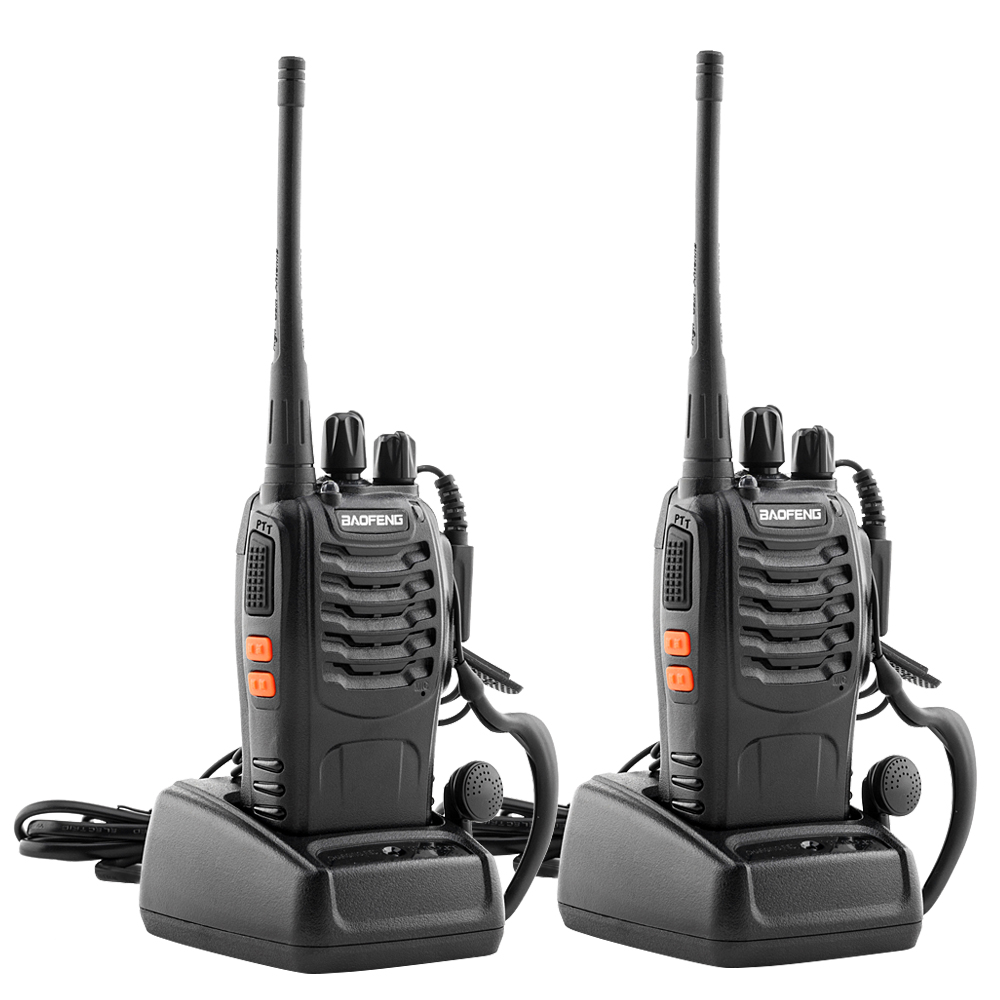
- Push-to-Talk (PTT) button
- Built-in microphone and speaker
- Antenna
- Rechargeable battery or replaceable battery pack
- Channel selection
- Volume control
- Charging cradle or charger, depending on model
- Optional earpiece, speaker microphone or surveillance accessory
When a user presses the PTT button, the radio transmits. Other radios configured to the same compatible channel can receive the transmission. Conventional radio communication is therefore different from a mobile-phone call: users generally share a communication channel rather than having a separate private connection for each conversation.
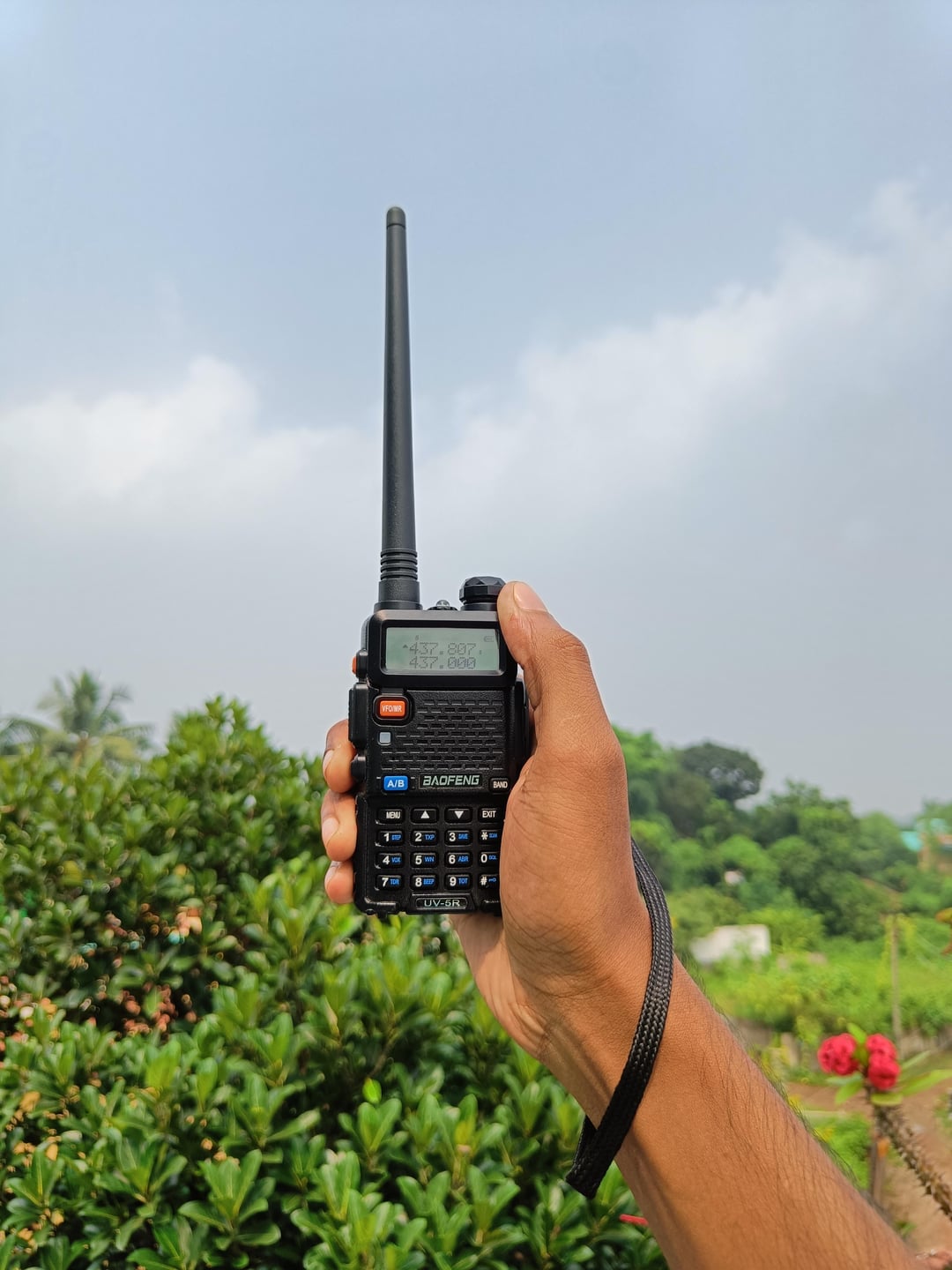
Licence-Free PMR 446 Radios in Kenya
The term licence-free radio should be used carefully.
In Kenya, the Communications Authority (CA) recognises low-power Private Mobile Radio (PMR 446) operation in the 446 MHz band on a class-licence basis. CA documentation states that use of this band does not require an individual frequency licence, subject to the applicable technical and regulatory conditions. Equipment must also be appropriately type-approved before use.
This is important because not every VHF or UHF handheld radio is licence-free. A radio simply being labelled “UHF,” “VHF,” “walkie-talkie” or “two-way radio” does not make it exempt from licensing.
For radios operating outside the applicable licence-free arrangement, organisations may need frequency assignment or other authorisation from the Communications Authority of Kenya.
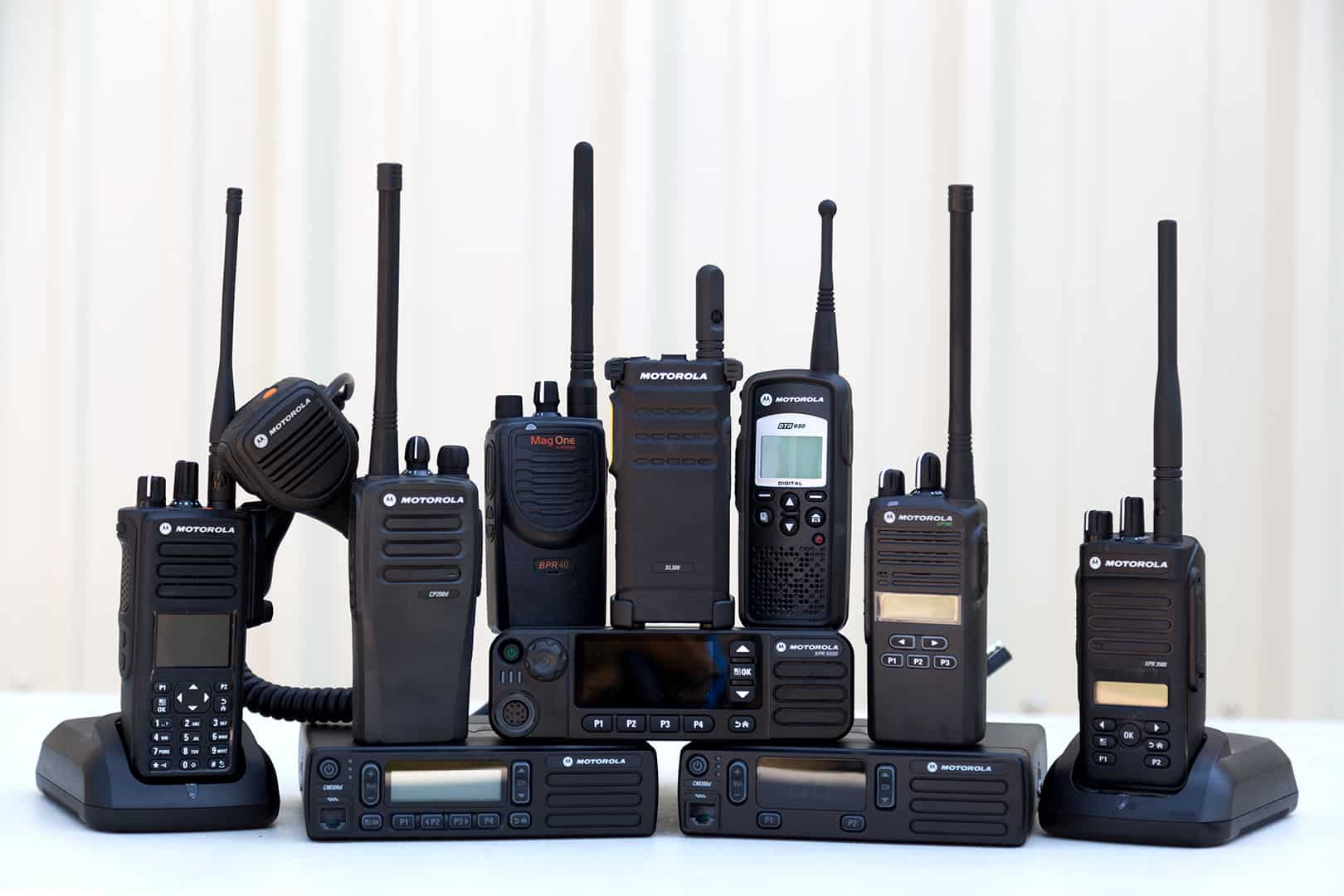
What Does PMR 446 Mean?
PMR 446 refers to a low-power short-range radio service operating around the 446 MHz band.
The CA’s National Table of Frequency Allocations identifies low-power private radio (PMR 446) within the 430–450 MHz allocation.
International PMR446 technical requirements commonly include low-power handheld operation and integral antennas. For example, ETSI specifications for digital PMR446 describe equipment operating in the 446 MHz range with a maximum effective radiated power of 500 mW. However, the exact requirements applicable to equipment used in Kenya should be confirmed against current CA requirements and the specific equipment approval.
Key Features of Licence-Free Radios
Depending on the model, licence-free handheld radios may offer:
- Push-to-Talk communication
- Multiple pre-programmed channels
- Rechargeable batteries
- Charging stations or desktop chargers
- Channel scan
- Monitor function
- Battery-status indication
- Voice prompts
- Hands-free/VOX operation on compatible models
- Earpiece and speaker-microphone compatibility
- Compact or rugged construction
- Digital or analogue operation, depending on model
Specifications vary significantly between manufacturers and models. We therefore recommend selecting a radio based on the operating environment rather than relying only on advertised range or power.
How Far Can a Licence-Free Radio Communicate?
There is no single reliable range figure for every site.
Actual communication distance can be affected by:
- Buildings and walls
- Concrete and steel structures
- Terrain
- Vegetation
- Elevation
- Radio positioning
- Interference
- Antenna configuration
- Battery condition
- The specific radio and operating mode
A radio that communicates effectively across an open area may perform very differently inside a multi-storey building, warehouse or densely developed urban area.
For larger or more demanding sites, Solutions Unlimited can advise on the appropriate radio configuration and, where necessary, recommend a licensed radio system instead of a licence-free solution.
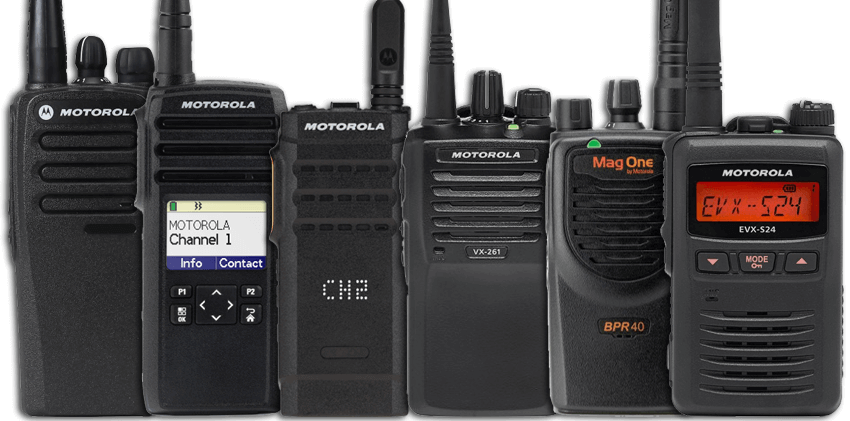
Licence-Free Radios vs Licensed Two-Way Radios
The right choice depends on the size, operating environment and communication requirements of the organisation.
Licence-Free PMR 446
Generally suitable for:
- Short-range site communication
- Security teams operating within a defined area
- Hotels and hospitality facilities
- Schools and institutions
- Events
- Farms and estates
- Construction sites
- Warehouses
- Outdoor recreation
Advantages can include simpler deployment and no individual frequency fee where the equipment and use fall within the applicable licence-free PMR 446 arrangement.
Licensed Radio Systems
A licensed system may be more appropriate where an organisation requires:
- Wider or more predictable coverage
- Assigned frequencies
- Larger operational areas
- Base stations or repeaters
- Multiple communication groups
- More advanced fleet-management features
- Dedicated radio-network planning
The Communications Authority provides procedures for frequency assignment and licensing of fixed and mobile radio communication services.
FBI-Style Hands-Free and Discreet Surveillance Kits
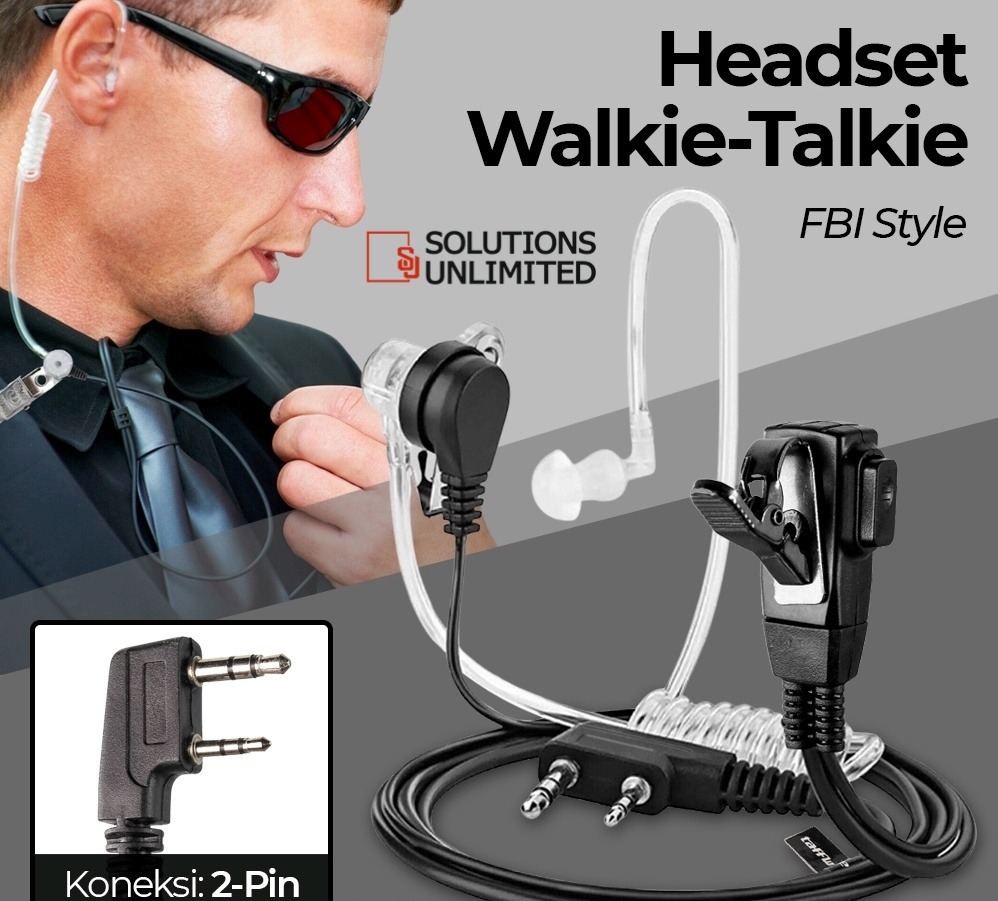
For security personnel, VIP protection teams, event staff and other users who need to communicate without holding the radio to their face, discreet surveillance or “FBI-style” earpiece kits can be used with compatible radios.
“FBI-style” is a common market description; it does not mean that the accessory is supplied by or endorsed by the FBI.
Depending on the model, surveillance kits can include:
- Acoustic tube earpiece
- In-line microphone
- Push-to-Talk button
- Combined microphone/PTT control
- Separate microphone and PTT
- Receive-only earpiece
- Quick-disconnect acoustic tube
- Transparent or low-profile earpiece components
- Noise-reduction accessories for selected environments
Motorola Solutions, for example, offers one-, two- and three-wire surveillance kits. Its two-wire configurations can combine the microphone and PTT, while three-wire versions can separate the microphone and PTT controls.
These accessories can be particularly useful for:
- Security guards
- Close-protection personnel
- VIP transport teams
- Hotel security
- Event security
- Front-of-house teams
- Casino and gaming security
- Retail security
- Supervisors who need discreet communication
Compatibility is important. An earpiece or surveillance kit designed for one radio family may not fit another model, so the radio model and connector should be confirmed before ordering.
Hands-Free Communication for Security Teams
A discreet earpiece can allow a guard to receive communications without repeatedly removing the radio from a belt or holster.
For example, a two-wire surveillance kit can provide an earpiece together with an accessible microphone/PTT control. Three-wire configurations can provide separate microphone and PTT controls for users who require a different operating arrangement.
For busy or noisy environments, the accessory should be selected according to the noise level, radio model and required level of discretion. Some professional surveillance accessories are specifically designed for loud environments, while receive-only versions are available for users who only need to listen.
Typical Applications in Kenya
Security Companies and Guards
Two-way radios allow security teams to communicate between gates, patrols, control rooms and supervisors without relying on mobile networks.
Construction Sites
Radios can help site supervisors, security personnel, stores teams and other workers coordinate activities where workers are spread across the site.
Hotels and Hospitality
Radios can support communication between security, housekeeping, maintenance, reception and operations teams.
Warehouses and Factories
Teams can use handheld radios to coordinate loading areas, stores, production areas, maintenance and security.
Events and Conferences
Event organisers can use radios to coordinate security, access control, parking, logistics, ushers and technical teams.
Schools and Institutions
Radios can provide short-range communication between security personnel, administrators, maintenance teams and event staff.
Farms and Estates
Where mobile coverage is inconsistent or teams need immediate group communication, appropriately selected radios can provide a practical communication option.
VIP Transport and Close Protection
Compact radios with discreet surveillance accessories can help security personnel communicate while maintaining a professional appearance during VIP Transport and close protection.
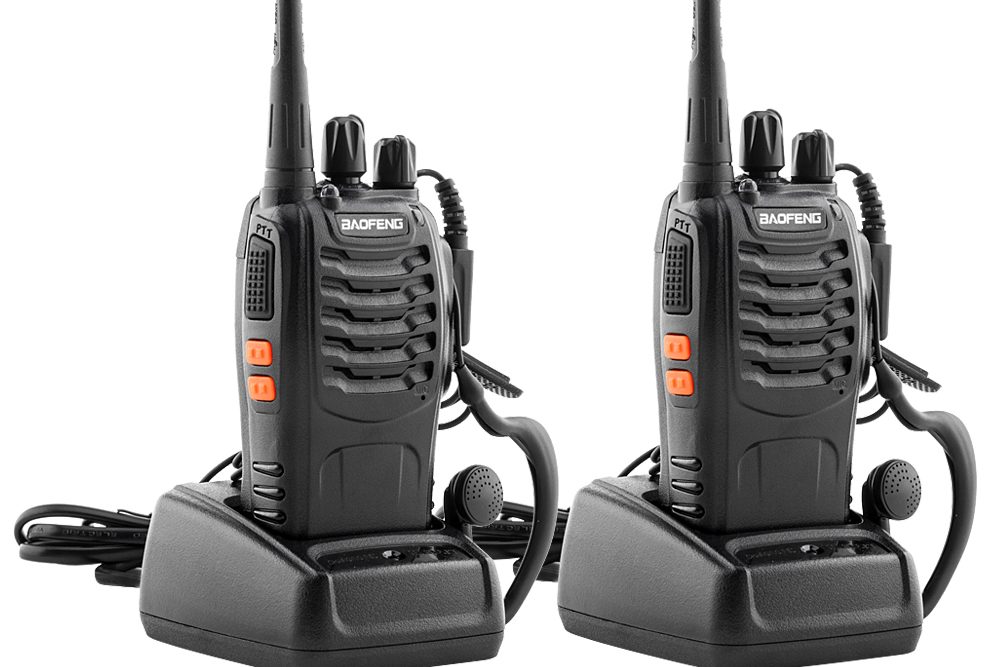
Choosing the Right Radio for Your Operation
Before purchasing, we recommend considering:
1. Is the radio actually licence-free?
Confirm that the specific equipment and proposed use comply with the applicable PMR 446 requirements. Do not assume that every UHF/VHF radio is licence-exempt.
2. Is the model type-approved?
The Communications Authority requires communication equipment marketed or used in Kenya to meet applicable type-approval requirements. CA maintains a list of type-approved and rejected equipment and advises users to confirm the approval status of equipment.
3. What environment will the radio operate in?
An office, hotel, construction site, factory and open farm may require very different equipment.
4. How many users will communicate?
A small team may only require a few handheld units, while a larger operation may need multiple communication groups, charging stations and additional accessories.
5. What battery arrangement is required?
Consider expected operating hours, charging availability, spare batteries and whether the radios will be used continuously during shifts.
6. Are hands-free accessories required?
Security and operational teams may benefit from earpieces, speaker microphones or discreet surveillance kits.
7. Is licence-free communication sufficient?
For larger premises or extended coverage requirements, a licensed radio network may provide a more appropriate solution.
Radio Programming and Installation Support
Although handheld radios are portable, professional deployment involves more than simply handing users a radio.
Depending on the equipment and licence arrangement, Solutions Unlimited can assist with:
- Initial radio setup
- Channel configuration
- User-group configuration where supported
- Accessory selection
- Charging arrangements
- Basic operating guidance
- Site-specific communication considerations
- Troubleshooting
- Repair and maintenance support
- Replacement accessories
- Communication-range assessment for suitable projects
Where licensed radios are required, frequency assignment and licensing remain subject to the Communications Authority of Kenya.
Radio Accessories
A complete communication solution may include more than the handheld radio itself.
Available accessories can include:
- Spare rechargeable batteries
- Desktop charging cradles
- Multi-unit charging stations
- Earpieces
- Speaker microphones
- Surveillance kits
- Acoustic tubes
- PTT accessories
- Carrying cases
- Belt clips
- Replacement antennas where supported
- Vehicle charging accessories
For organisations operating multiple shifts, spare batteries and multi-unit charging arrangements can be particularly useful in keeping radios available throughout the working day.
Battery and Equipment Maintenance
Good maintenance can extend the useful life of radio equipment.
Users should:
- Charge batteries according to the manufacturer’s instructions.
- Avoid exposing equipment to conditions beyond its rated specifications.
- Inspect charging contacts and connectors regularly.
- Keep microphones and speakers clean.
- Replace damaged accessories.
- Store radios and batteries appropriately when not in use.
- Report unusual battery swelling, overheating or charging behaviour promptly.
Surveillance accessories also require care. Motorola’s documentation, for example, recommends periodic cleaning of earpieces and appropriate storage to help prolong accessory life.
Warranty and Technical Support
Solutions Unlimited supplies communication-radio solutions with support appropriate to the equipment supplied.
Selected radio products may be supplied with up to two years manufacturer’s warranty, together with 14 days of free technical support and lifetime virtual support, subject to the applicable product and service terms.
Warranty coverage should always be confirmed against the specific radio, accessory and manufacturer because warranty periods and exclusions can differ between products.
Our technical support can assist with radio setup, basic troubleshooting, accessory compatibility and other issues relating to products supplied by Solutions Unlimited.
Solutions Unlimited helps organisations select communication equipment based on how the radios will actually be used.
Our approach includes:
- Understanding the operating environment
- Identifying whether a licence-free or licensed solution is appropriate
- Checking equipment compatibility
- Advising on accessories
- Supporting installation and configuration
- Providing user guidance
- Supporting repairs where applicable
- Providing after-sales technical assistance
The objective is not simply to supply the cheapest radio, but to provide equipment that is appropriate for the communication requirements of the site.
Frequently Asked Questions
Are licence-free walkie-talkies legal in Kenya?
Yes, Kenya provides for low-power PMR 446 operation on a class-licence basis, subject to applicable technical and regulatory conditions. The specific equipment must meet the relevant requirements and be type-approved.
Does every UHF radio operate without a licence?
No. UHF describes a frequency range, not a licence exemption. A UHF handheld radio operating outside the applicable licence-free PMR 446 arrangement may require frequency authorisation.
Are PMR 446 radios the same as police radios?
No. Licence-free PMR 446 radios operate within the applicable civilian short-range radio framework. They should not be represented as police-radio equipment or programmed to restricted/public-safety frequencies.
Do licence-free radios require airtime?
No mobile-network airtime is required for direct radio-to-radio communication within the applicable operating range. The radios do, however, require batteries and appropriate charging.
Can licence-free radios communicate with licensed radios?
Not necessarily. Compatibility depends on frequency, channel configuration, technical parameters and regulatory authorisation. Equipment should only be configured and operated within the frequencies and conditions permitted for that equipment and user.
How far can a licence-free walkie-talkie communicate?
Range varies considerably. Buildings, walls, terrain, vegetation, interference, radio configuration and antenna conditions can all affect communication. Advertised maximum range should therefore not be treated as a guaranteed distance.
Can I use these radios inside a hotel or warehouse?
Yes, appropriately selected licence-free radios can be suitable for short-range communication in hotels, warehouses and similar environments. A site assessment may be useful where there are reinforced concrete walls, multiple floors or extensive structures.
What is an FBI-style earpiece?
It is a common description for a discreet radio surveillance earpiece, usually incorporating an acoustic tube or low-profile earpiece and, depending on the model, a microphone and PTT control. It is not an indication that the product is supplied or endorsed by the FBI.
Can security guards use surveillance earpieces?
Yes. Compatible surveillance accessories are commonly used where discreet communication is useful, including security, close protection, hospitality and event operations.
Are all earpieces compatible with all radios?
No. Connector type, radio model, audio configuration and accessory specifications must be checked before purchase.
Do you supply Motorola and Baofeng radios?
Solutions Unlimited can advise on available radio models and compatible accessories. Current brands, models and stock should be confirmed at the time of quotation rather than assumed from older website listings.
Do you repair two-way radios?
Solutions Unlimited can provide repair and technical assistance for supported equipment. The availability of repair services depends on the radio model, fault and availability of replacement components.
Can you help us obtain a licensed radio frequency?
Where a licensed radio network is required, we can advise on the equipment and process. Frequency assignment and licensing are administered by the Communications Authority of Kenya.
Do the radios come with a warranty?
Selected products may have up to two years manufacturer’s warranty. The exact warranty period depends on the radio or accessory supplied and the applicable manufacturer terms.
Two-Way Radio Communication for Kenyan Operations
The right handheld radio depends on more than advertised range or price. Frequency authorisation, type approval, operating environment, battery requirements, user numbers, accessories and expected coverage should all be considered before purchasing.
Solutions Unlimited supplies and supports two-way radio communication solutions for security teams, businesses, institutions, events, construction sites and other operational environments in Kenya.
Whether you need a small set of licence-free PMR 446 radios or a more structured licensed communication system, we can help you select equipment appropriate to the application.
SOME OF OUR LOCAL AND INTERNATIONAL CORPORATE CLIENTS:






























































Countries Using Our Solutions: Kenya| Uganda| Tanzania| Somalia| Somaliland| South Sudan| Ethiopia| Namibia
Solutions Unlimited Head Office: Seventh Floor, Pinetree Plaza, Kaburu Drive, Off Ngong Road-Nairobi Kenya.
Call us: +254 704 455 673 OR +254 20 2014 802 | Whatsapp: +254 704 455 673 | servicedesk@solutionsunlimited.co.ke