WALK THROUGH AND HAND HELD SECURITY METAL DETECTORS
Walk-through metal detectors and handheld metal detectors are security-screening devices designed to detect metallic objects carried by or on a person. They provide an additional layer of screening at controlled entrances and can help security personnel identify metallic items that may require further inspection. Click here to buy
Walk-through detectors are designed to screen people as they pass through an entrance, making them suitable for locations with regular pedestrian traffic. Handheld detectors are portable screening tools that can be used for secondary checks, targeted screening and locations where installing a fixed walk-through unit is not practical.
These devices are metal detectors, not gold prospecting or gold-detection machines. Their purpose is security screening rather than mineral exploration.
Specifications vary considerably between models. Common features may include:
- Multiple detection zones
- Adjustable sensitivity levels
- Audible and visual alarms
- LED zone indication
- Digital control panel
- Programmable detection settings
- Mains-powered operation
- Remote control on selected models
- Traffic or people counters on selected models
- Password-protected settings on selected models
- Multiple detection programs
- Optional networking or reporting capabilities on advanced systems
Walk-through detectors may be available with 6, 12, 18 or more detection zones, depending on the manufacturer and model. Multi-zone technology can help security personnel identify the approximate vertical area where metal has been detected.
Exact detection sensitivity, number of zones, aperture dimensions, power requirements, operating temperature, ingress protection and available software features should always be confirmed from the manufacturer’s datasheet for the selected model.
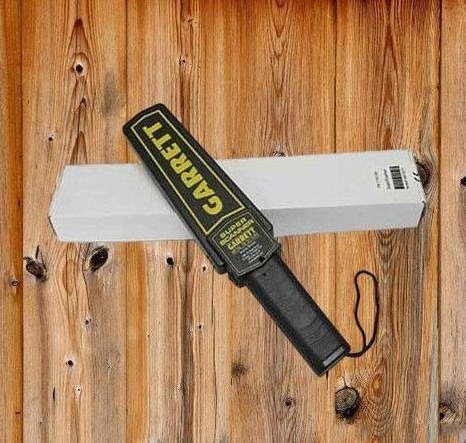
Handheld security detectors are compact screening devices designed for portable use. Typical features include:
- Lightweight handheld design
- Audible alarm
- Vibration alert on selected models
- Visual detection indicator
- Adjustable sensitivity on selected models
- Battery-powered operation
- Rechargeable or replaceable battery options
- Low-battery indication on selected models
- Detection of ferrous and non-ferrous metallic objects
- Carrying or charging accessories on selected models
Detection range and sensitivity vary according to the model and are influenced by the size, composition, orientation and position of the metallic object. Handheld detectors should therefore be tested and configured according to the manufacturer’s instructions and the intended screening procedure.
How Metal Detectors Work
A metal detector generates an electromagnetic field around its sensing area. When a conductive metallic object enters that field, it changes the electromagnetic response detected by the device. The system processes this change and, when the configured detection threshold is reached, produces an audible, visual or vibration alert.
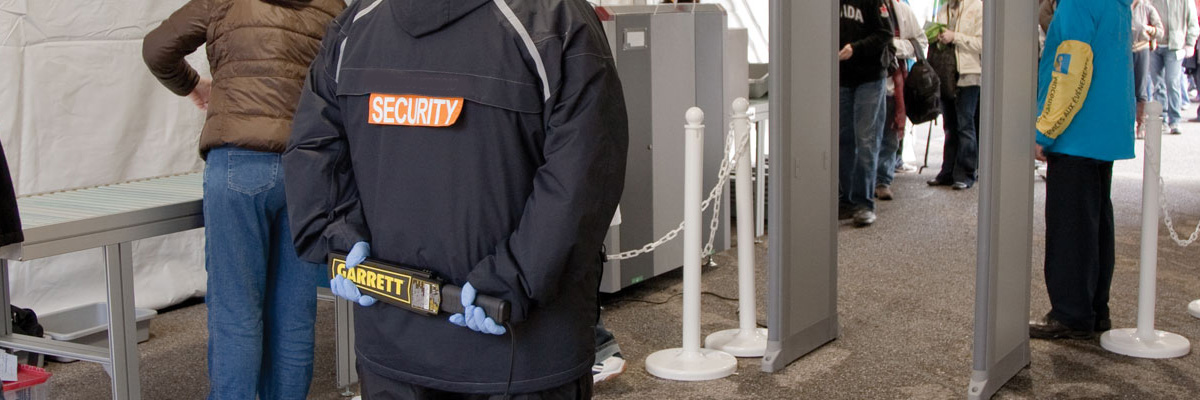
Walk-through systems can use multiple detection zones to help indicate where metal has been detected. Handheld devices allow a trained operator to scan specific areas more closely during secondary screening.
The technology is designed to detect metallic objects, not to identify every object or determine the precise nature of an item. Detection performance depends on the equipment, settings and characteristics of the object being screened.
Walk-through and handheld detectors can be used in a range of Kenyan security environments, including:
- Corporate offices
- Schools and universities
- Government facilities
- Courts and correctional facilities
- Airports and transport facilities
- Hotels
- Shopping centres
- Banks and financial institutions
- Factories and warehouses
- Stadiums and event venues
- Places of worship
- Conferences and exhibitions
- Other controlled-access premises
Walk-through units are particularly appropriate for main entrances and high-volume checkpoints, while handheld detectors are useful for secondary screening, temporary events, visitor checks and areas where fixed screening equipment cannot be installed.
Walk-Through vs Handheld Metal Detectors
A walk-through system is designed for continuous pedestrian screening and can process larger numbers of people without requiring each person to be individually scanned by an operator.
A handheld detector is more flexible and portable. It allows a trained security officer to conduct a closer inspection after an initial alarm or as part of a controlled screening procedure.
Many security environments benefit from using both: the walk-through detector provides primary screening, while a handheld unit provides secondary or targeted screening.
Installation & Deployment
Proper installation and configuration are important for reliable screening. A walk-through detector should be positioned in an appropriate entrance area with sufficient space for controlled pedestrian movement. The surrounding environment should also be assessed for potential sources of electromagnetic interference or other conditions that could affect performance.
Before commissioning, the system should be tested using appropriate test objects and configured according to the required security level and operating environment. Security personnel should understand the alarm indications, sensitivity settings and established screening procedures.
For technical specifications, detection zones, sensitivity, operating conditions and certifications, refer to the official manufacturer’s documentation for the exact model supplied.
For Kenyan installations, applicable building, occupational-safety and security requirements should also be considered according to the type and location of the facility.
Handheld detectors do not normally require permanent installation. However, operators should receive appropriate instruction on scanning technique, maintaining consistent distance and responding to alarms.
Security Screening with X-Ray Baggage Scanners
Metal detectors and X-ray baggage scanners perform different functions. A metal detector is designed primarily to identify metallic objects associated with a person, while an X-ray baggage scanner is used to examine the contents of bags and other items.
For facilities requiring both personnel and baggage screening, the technologies can be deployed together as part of a broader entrance-security arrangement.
Brands & Product Selection
Depending on current availability and project requirements, security-screening equipment available in the Kenyan market may include products from manufacturers such as Garrett, ZKTeco, CEIA, Rapiscan and other specialist security-screening manufacturers.
Brand availability, distributor status and specific models can change. Customers should therefore confirm the current model, warranty, specifications and supply arrangement before purchase.
Key Benefits
Walk-through and handheld metal detectors can provide:
- Faster entrance screening
- Consistent security procedures
- Additional protection at controlled entrances
- Reduced reliance on visual inspection alone
- Portable secondary screening capability
- Adjustable detection sensitivity on suitable models
- Visual and audible alarm indication
- Support for high-traffic screening environments
They are particularly useful where an organisation needs a repeatable screening procedure for employees, visitors, students, contractors or event attendees.
Limitations
Metal detectors are designed to detect metallic objects and should not be treated as universal security-screening devices. Detection performance varies according to the type, size, composition, orientation and location of the object, as well as detector sensitivity and environmental conditions.
Very high sensitivity settings can increase nuisance alarms, while inappropriate settings may reduce the effectiveness of screening. Walk-through units also require suitable space and controlled pedestrian flow.
Handheld detection relies partly on operator technique and consistency, making appropriate training and screening procedures important.
Metal detectors should therefore form part of a broader security strategy that may include trained security personnel, access control, X-ray baggage screening, physical search procedures and other appropriate security measures.
Warranty & Technical Support
Solutions Unlimited supplies and installs walk-through and handheld metal detection solutions with up to 2 years manufacturer’s warranty, 14 days of free technical support and lifetime virtual support, subject to the applicable product and service terms.
Frequently Asked Questions
What is a walk-through metal detector?
It is a fixed security-screening system that detects metallic objects as people pass through its detection area. Multi-zone models can indicate the approximate area in which metal has been detected.
What is a handheld metal detector?
It is a portable security-screening device used to detect metallic objects during secondary or targeted screening.
Are metal detectors the same as X-ray scanners?
No. Metal detectors screen primarily for metallic objects, while X-ray baggage scanners generate images that allow trained operators to examine the contents of bags and other items.
Can metal detectors detect gold?
Gold is a metal and may be detected by security metal detectors, depending on the detector’s technology, sensitivity and the size and position of the object. However, security metal detectors are not gold prospecting machines and should not be selected for mineral exploration.
How many detection zones does a walk-through detector have?
This varies by model. Common configurations include 6, 12 and 18 or more zones, with advanced systems offering additional zoning and configuration capabilities.
Can sensitivity be adjusted?
Yes. Many walk-through and handheld models provide adjustable sensitivity, although the available settings vary by model.
Can a walk-through detector be used outdoors?
Some models are designed for more demanding environments, while others are intended primarily for indoor use. The manufacturer’s environmental rating and installation requirements should be checked before outdoor deployment.
Do security guards need training?
Yes. Operators should understand the equipment, alarm indicators, appropriate scanning technique and the site’s established security procedures. A detector should complement, rather than replace, trained security personnel.
Can metal detectors be integrated with other security systems?
Depending on the model and installation, screening equipment can form part of a broader security arrangement that includes access control, X-ray baggage inspection, alarms and other security technologies.
At Solutions Unlimited we have in stock rechargeable 9 volt batteries with long standby hours and Chargers for the rechargeable batteries used in hand held metal detectors. If you are looking for where to buy metal detector scanners at a fair price , we stock affordable, top quality installation of metal detector scanners in Kenya. We serve clients in Mombasa, Thika,Busia, Meru, Nairobi, Kisumu, Eldoret, Kisii, Malaba, Nakuru, Naivasha, Nanyuki, Kericho,Namanga, and other major towns.
SOME OF OUR LOCAL AND INTERNATIONAL CORPORATE CLIENTS:














































Countries Using Our Solutions: Kenya| Uganda| Tanzania| Somalia| Somaliland| South Sudan| Ethiopia| Namibia
Solutions Unlimited Head Office: Seventh Floor, Pinetree Plaza, Kaburu Drive, Off Ngong Road-Nairobi Kenya.
Call us: +254 704 455 673 OR +254 20 2014 802 | Whatsapp: +254 704 455 673 | servicedesk@solutionsunlimited.co.ke