StandAlone Wireless Battery Operated
Carbon Monoxide & Smoke Detectors
Standalone battery-operated smoke and carbon monoxide (CO) detectors provide independent early warning of two different safety hazards. Smoke detectors detect particles associated with fire and activate an audible alarm, while carbon monoxide detectors monitor the surrounding air for potentially dangerous concentrations of CO, a colourless and odourless gas produced by incomplete combustion. These devices are suitable for homes, apartments, hotels, offices, schools, rental properties, staff accommodation, utility areas, garages and other occupied buildings where additional early-warning protection is required.Click here to get a quote
Smoke Detectors
Standalone smoke detectors are generally designed to detect smoke at an early stage of a fire and provide an audible warning to occupants. Depending on the model, they may use photoelectric, ionization or other approved sensing technologies. Smoke detector prices in Kenya range from KSH 1,000 to KSH 8,999 for standalone units, depending on the brand and features.
General Smoke Detector Specifications
Typical battery-operated smoke detectors may include:
- Photoelectric or other approved smoke-sensing technology
- Built-in audible alarm, commonly around 85 dB on suitable models
- Test and hush/silence function
- Low-battery warning
- Visual status indicator
- Battery-powered operation
- Replaceable or sealed long-life battery options
- Fault indication on selected models
- Wireless interconnection on compatible models
- Smart-home connectivity on selected products
Exact sensing technology, alarm characteristics, battery life, operating temperature, certification, service life and interconnection capability vary between manufacturers and models. These specifications should therefore be confirmed against the Specific Data Sheet before purchase or installation.
How a Smoke Detector Works
A smoke detector continuously monitors the surrounding environment. When smoke enters its sensing chamber and reaches the device’s programmed alarm threshold, the detector activates its built-in audible alarm to warn occupants.
Because smoke can be an early indication of a developing fire, early detection gives occupants additional time to respond, evacuate and contact emergency services. A smoke detector does not extinguish a fire and should form part of a wider fire-safety strategy appropriate to the building.
Carbon Monoxide Detectors
A carbon monoxide detector is designed to detect elevated concentrations of carbon monoxide in the surrounding air. CO can be produced by incomplete combustion from sources such as generators, fuel-burning appliances, vehicles and other combustion equipment.
General CO Detector Specifications
Depending on the model, a standalone CO detector may include:
- Electrochemical CO sensor technology
- Audible alarm
- Visual alarm/status indicators
- Test and reset function
- Low-battery warning
- Battery-powered operation
- Digital CO concentration display on selected models
- Memory or peak-level indication on selected models
- Replaceable or sealed long-life battery options
- Wireless or interconnected operation on compatible models
The alarm threshold, response characteristics, sensor life, battery life, operating temperature and certification should always be verified against the manufacturer’s specifications for the selected detector.
How a CO Detector Works
The detector continuously monitors the surrounding air using its CO sensor. When carbon monoxide reaches the concentration and exposure level programmed into the device, it activates an audible and/or visual alarm to warn occupants.
A CO detector does not remove carbon monoxide from a building. If a CO alarm activates, occupants should follow the appropriate emergency procedure, move to fresh air where it is safe to do so and have the suspected source investigated by a qualified professional.
Combined Smoke & Carbon Monoxide Detectors
Some devices combine smoke and carbon monoxide detection in a single unit. These products can provide two types of warning from one installation point and may be suitable where both fire and CO hazards need to be monitored.
The sensing technologies remain separate within the device, and the exact alarm behaviour and detection thresholds depend on the selected model.
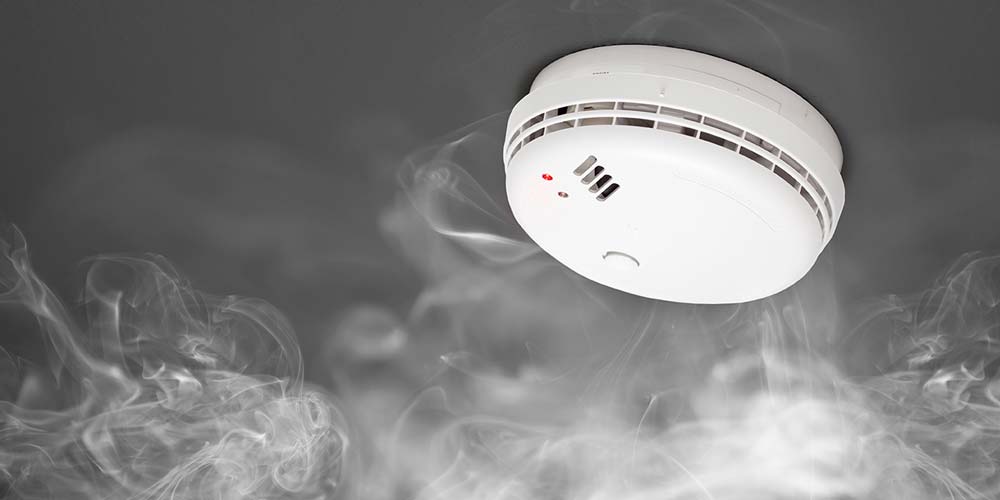
Battery-operated smoke and CO detectors can provide supplementary protection in a wide range of Kenyan environments, including:
- Residential houses and apartments
- Rental properties and staff accommodation
- Hotels and guest houses
- Offices
- Schools and educational facilities
- Kitchens and utility areas
- Garages and generator areas
- Workshops
- Commercial premises
- Other occupied buildings where standalone detection is appropriate
CO detection is particularly relevant in areas where fuel-burning equipment, generators, boilers or other combustion sources may be present.
Installation Considerations
Standalone detectors are relatively simple to install because they do not normally require connection to a building’s mains electrical wiring. Battery operation also allows the detector to continue functioning during a mains power interruption, provided the battery remains adequately charged.
Detector positioning should be determined according to the manufacturer’s installation instructions, the characteristics of the premises and applicable fire-safety requirements. Smoke detectors are generally positioned on ceilings or high on walls where appropriate, while CO-detector placement depends on the potential CO source, room configuration and the manufacturer’s instructions.
Care should be taken to avoid locations where dust, steam, cooking vapour, excessive airflow or other environmental conditions could cause unwanted alarms or affect detector performance.
Important: There is no single placement arrangement that is appropriate for every building. A competent assessment should be undertaken where multiple detectors or a comprehensive fire detection system is required.
Key Benefits
Standalone detectors offer several practical benefits:
- Early warning: Provides occupants with an audible warning when smoke or dangerous CO levels are detected.
- Independent operation: Battery-powered units can operate without a dedicated mains connection.
- Simple installation: Suitable for locations where installing a wired detection system may not be practical.
- Low maintenance: Routine testing and battery replacement are generally straightforward.
- Supplementary protection: Can provide additional warning in residential and commercial environments.
- Flexible deployment: Individual detectors can be installed according to the hazards and layout of the premises.
Limitations
Standalone detectors are life-safety warning devices, not fire-fighting equipment. They do not extinguish fires, remove smoke or neutralise carbon monoxide.
Performance depends on correct product selection, installation, environmental conditions, regular testing and timely battery or detector replacement. Smoke detectors can also produce nuisance alarms when exposed to unsuitable levels of cooking vapour, steam, dust or other airborne particles.
A CO detector should never be considered a substitute for proper maintenance of generators, fuel-burning appliances, ventilation systems and other potential CO sources.
Where a building requires comprehensive fire detection, alarm, monitoring or evacuation arrangements, standalone detectors may not provide the level of coverage or integration required. A properly designed fire detection and alarm system should be considered where applicable.
Solutions Unlimited supplies and installs standalone battery-operated smoke and carbon monoxide detectors in Kenya, with experience in electronic fire-safety and security solutions.
Our Electronic Fire Safety Solutions in Kenya can be assessed according to the type of premises, occupancy, potential hazards and the selected detector’s specifications. We can assist with product selection, installation guidance, testing and after-sales technical support.
Smoke and CO detectors should be considered part of an appropriate fire-safety strategy rather than as a replacement for other necessary equipment. Depending on the premises and risk assessment, this may include portable fire extinguishers, fire blankets, fire alarm systems, emergency lighting and other safety measures.
Warranty & Technical Support
Solutions Unlimited supplies smoke and carbon monoxide detection solutions with up to 2 years manufacturer’s warranty, 14 days of free technical support and lifetime virtual support, subject to the applicable product and service terms.
Technical assistance can include product selection, installation guidance, configuration, troubleshooting and general after-sales support.
Frequently Asked Questions
What is the difference between a smoke detector and a CO detector?
A smoke detector is designed to detect particles associated with fire, while a CO detector monitors for potentially dangerous concentrations of carbon monoxide. They address different hazards.
Can one detector detect both smoke and carbon monoxide?
Yes. Combination smoke/CO detectors are available and incorporate both detection functions in a single device. The exact features and specifications depend on the model.
Can a battery-operated smoke detector work during a power outage?
Yes. A battery-powered detector can continue operating during a mains power failure as long as its battery has sufficient charge and the device is functioning correctly.
Where should smoke and CO detectors be installed?
Placement depends on the detector type, building layout, potential hazards and manufacturer instructions. Detectors should be installed according to the applicable installation guidance rather than using a single standard location for every building.
Do CO detectors detect smoke?
No. A standard CO detector is designed to detect carbon monoxide, not smoke. Separate smoke detection is required unless a combination smoke/CO detector is installed.
How often should a detector be tested?
Follow the manufacturer’s instructions. Test functions should be used regularly, and batteries or detectors should be replaced according to the manufacturer’s recommended service life.
Can a smoke detector replace a fire extinguisher?
No. A smoke detector provides an early warning, while a fire extinguisher is designed to help control an appropriate small fire. They serve different purposes.
Are standalone detectors suitable for commercial buildings in Kenya?
They can be suitable for certain applications, but the appropriate solution depends on the building’s size, occupancy, fire risks and applicable requirements. Larger or higher-risk premises may require a professionally designed and integrated fire detection and alarm system.
For clients seeking the cost of smoke detectors in Kenya or guidance on where to buy wireless smoke detectors at fair prices, our qualified technical team provides professional advice tailored to each application. We serve residential, commercial, and institutional clients across Nairobi, Thika, Meru, Kisumu, Mombasa, Eldoret, Kisii, Nakuru, Naivasha, Nanyuki, Kericho, Namanga, Busia, and other major towns nationwide.
SOME OF OUR LOCAL AND INTERNATIONAL CORPORATE CLIENTS:














































Countries Using Our Solutions: Kenya| Uganda| Tanzania| Somalia| Somaliland| South Sudan| Ethiopia| Namibia
Solutions Unlimited Head Office: Seventh Floor, Pinetree Plaza, Kaburu Drive, Off Ngong Road-Nairobi Kenya.
Call us: +254 704 455 673 OR +254 20 2014 802 | Whatsapp: +254 704 455 673 | servicedesk@solutionsunlimited.co.ke