Biometric Time Attendance Systems in Kenya: A Smarter Way to Manage Employee Attendance
Managing employee attendance manually can be time-consuming and prone to errors. Biometric time attendance systems provide organisations with a more accurate and efficient way to record when employees report to work, leave, take breaks and work overtime.
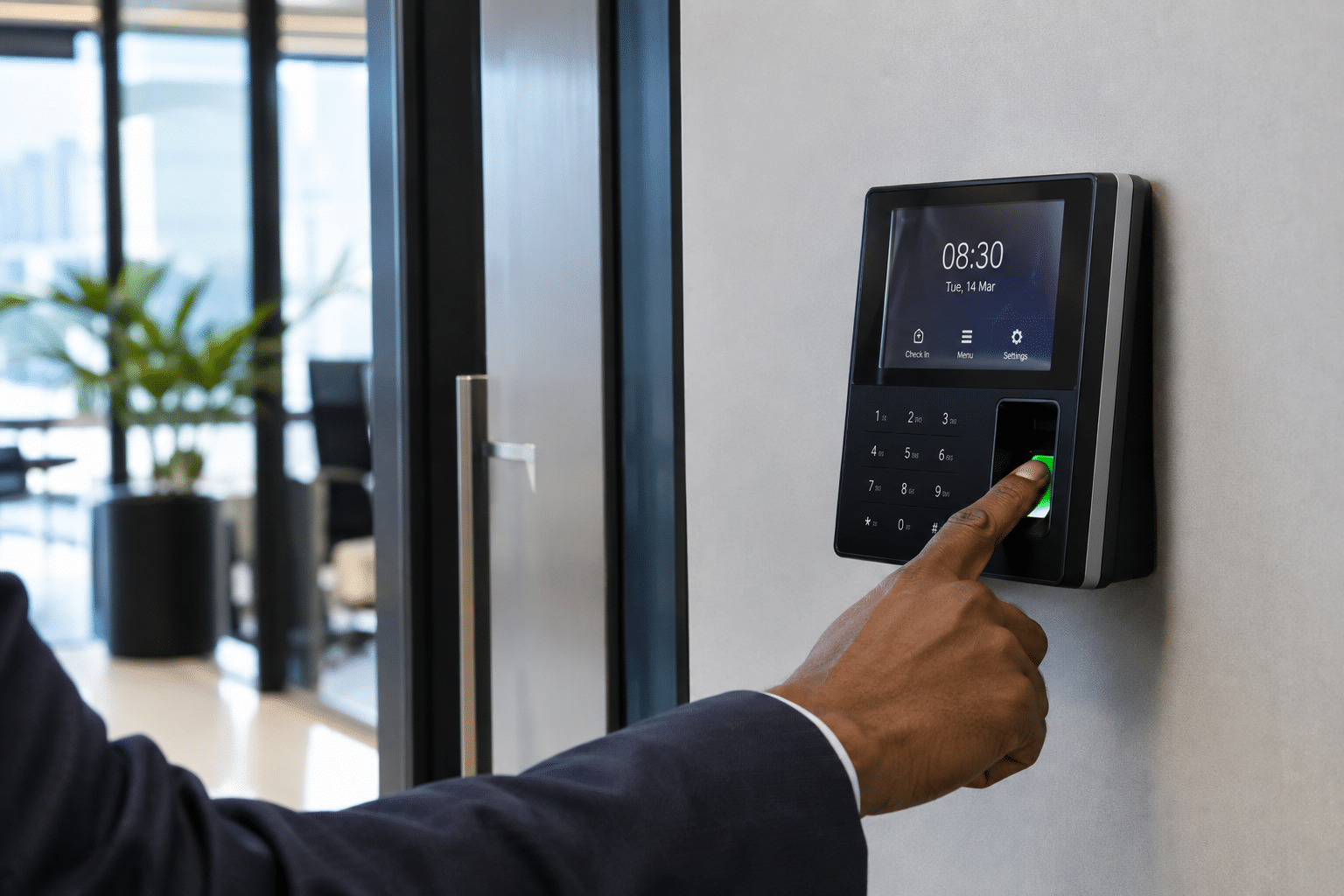
A biometric attendance system uses unique biological characteristics such as fingerprints, facial recognition or palm recognition to identify employees. Unlike paper registers, PINs or attendance cards, biometric identification makes it considerably harder for one employee to record attendance on behalf of another.
What Is a Biometric Time Attendance System?
A biometric time attendance system is a combination of hardware and software used to capture, store and manage employee attendance records. Employees register their biometric details on a terminal and subsequently authenticate themselves when entering or leaving the workplace.
Depending on the model, systems may support fingerprint, facial recognition, palm, RFID cards, PINs or combinations of these methods.
Modern systems can record attendance information such as:
- Clock-in and clock-out times
- Late arrivals and early departures
- Overtime
- Absence
- Breaks and working hours
- Department or employee attendance
- Attendance reports for payroll processing
Capacity varies by model, with solutions available for small offices as well as organisations with hundreds or thousands of employees.
Why Are Biometric Attendance Systems Important?
Accurate attendance information is important for workforce management and payroll preparation. Automated systems reduce the administrative work associated with manual registers and provide a consistent electronic record.
For Kenyan organisations, attendance data can also support proper employment record management. The Employment Act, 2007 requires employers to maintain specified employment records.
A biometric system can also help organisations identify attendance patterns, improve accountability and reduce errors when preparing payroll.
Integration with Payroll and HR Systems
One of the major advantages of modern biometric time attendance systems is their ability to integrate with payroll and HR management systems.
Depending on the device and software, attendance data can be exported or transferred through formats such as Excel, CSV, APIs or database connections. This allows attendance information to be processed alongside employee records, working hours, overtime and other payroll inputs.
Integration requirements vary between organisations. Before purchasing a system, it is therefore important to confirm compatibility with the organisation’s existing payroll, HR or ERP software rather than assuming that every biometric device will connect directly to every payroll platform.
Installation and Technical Support in Kenya
Professional installation is important for reliable operation. Site assessment helps determine suitable terminal locations, network connectivity, power requirements and the number of employees or departments that need to be accommodated.
In Kenya, businesses may also require assistance with employee enrolment, system configuration, software setup, payroll integration, training and ongoing technical support.
Solutions Unlimited provides biometric attendance solutions with installation, configuration and technical support, with available solutions designed for different organisation sizes and workplace requirements. Warranty and support options should be confirmed according to the specific equipment selected.
Data Protection and Biometric Information
Biometric information is sensitive personal data under Kenya’s data protection framework. Organisations using fingerprint or facial-recognition attendance systems should therefore consider lawfulness, purpose limitation, data minimisation, security, retention and access controls.
The Office of the Data Protection Commissioner (ODPC) specifically highlights the importance of accuracy, appropriate safeguards and retaining biometric information only for as long as necessary.
Organisations should establish appropriate policies and procedures before collecting employee biometric information.
Frequently Asked Questions
How does a biometric attendance system work?
An employee identifies themselves using a registered fingerprint, face, palm, card or PIN. The system records the transaction and generates attendance data for authorised administrators.
Can biometric attendance integrate with payroll?
Yes. Many systems can export or transmit attendance information to payroll or HR platforms. Compatibility should be confirmed before installation.
Which biometric method is best?
The appropriate method depends on the workplace, employee numbers, environment, required security level and operational requirements. Fingerprint and facial recognition are commonly available options.
Can the system work without internet?
Many attendance terminals can continue recording transactions locally when internet connectivity is unavailable and synchronise data when connectivity is restored. This depends on the specific system.
Is biometric attendance suitable for Kenyan businesses?
Yes. It can be used in offices, factories, schools, hospitals, hotels, warehouses, construction sites, institutions and other workplaces, provided the system is implemented appropriately and applicable data-protection requirements are addressed.
How long does installation take?
Installation time depends on the number of terminals, network infrastructure, employee database, software configuration and payroll integration requirements.
Conclusion
A well-designed Biometric time attendance system in Kenya can simplify attendance management, improve the accuracy of working-hour records and provide useful information for payroll and HR processes. Selecting the right system requires more than choosing a biometric terminal; organisations should also consider capacity, integration, installation, data protection, warranty and long-term technical support.