First Aid Kit Box for Home, Office and Industrial Use
A first aid kit or box provides essential supplies for responding to injuries and medical emergencies before professional medical assistance is available. For homes, offices, schools, commercial premises, factories, construction sites and other workplaces, having appropriate first aid equipment readily accessible is an important part of emergency preparedness. Get a Quote
A suitable first aid kit should be selected according to the environment, number of people exposed to risk and the types of injuries that could reasonably occur. Workplace requirements in Kenya are also governed by specific occupational safety regulations, making correct selection, accessibility, maintenance and replenishment important considerations for employers.
First Aid Kits for Homes and Workplaces
First aid requirements differ considerably between a home, an office and a higher-risk industrial environment.
A basic home or vehicle kit may contain items such as:
- Adhesive plasters
- Sterile gauze and wound dressings
- Bandages
- Antiseptic or wound-cleansing products
- Disposable gloves
- Scissors
- Safety pins
- Eye pads
- Burn dressings
- Thermal or emergency blanket
- First aid guidance leaflet
- Other items appropriate to the identified risks
For workplaces, the contents should be determined by a risk assessment rather than by using a generic shopping list. Kenya’s Occupational Safety and Health (First Aid in the Workplace) Regulations specify minimum quantities for workplace first aid boxes according to the number of workers, while also requiring the contents to reflect the occupier’s workplace risk assessment. The Regulations specifically state that medicine should not be included in the workplace first aid box or cupboard.
Kenyan Workplace First Aid Requirements
Under Kenya’s Occupational Safety and Health Act, an occupier is required to provide and maintain a readily accessible first aid box or cupboard of the prescribed standard.
The 2024 First Aid in the Workplace Regulations provide more detailed requirements. Among other provisions, workplaces must:
- Provide and maintain appropriate first aid appliances and services.
- Keep first aid facilities readily accessible.
- Inform workers about first aid procedures and the location of first aid kits.
- Appoint an adequate number of trained first-aid personnel.
- Clearly mark first aid boxes, cupboards or rooms with the words “FIRST AID.”
- Maintain the contents of first aid boxes according to workplace requirements and risk assessment.
- Conduct a first aid audit at least once every 12 months.
- Maintain appropriate records of injuries, illnesses and first aid treatment.
- Establish emergency procedures for transferring casualties to an appropriate health facility.
The number of appointed first-aiders also increases according to the size of the workforce. For example, the Regulations require at least one appointed first-aider for workplaces with fewer than 10 workers, with additional personnel required as workforce numbers increase.
This means that purchasing a first aid box alone does not necessarily constitute a complete workplace first-aid arrangement. Equipment, trained personnel, accessibility, inspection, documentation and emergency procedures should work together.
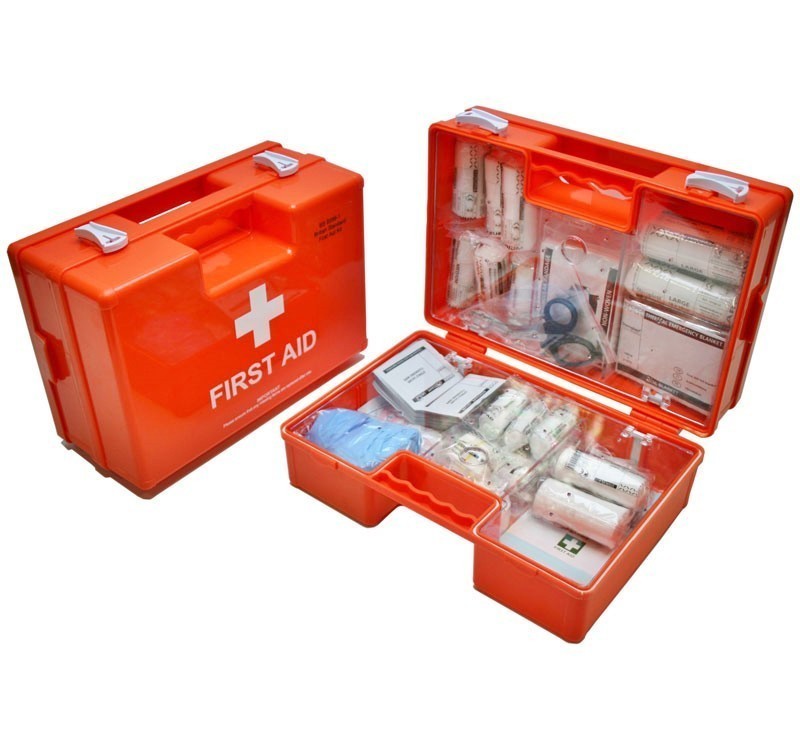
Minimum Contents for Workplace First Aid Boxes
The 2024 Kenyan Regulations provide a specific minimum list of items, with quantities varying according to workforce size.
These include:
- Gauze squares
- Sterilised cotton wool
- Antiseptic solution
- Eye pads
- Adhesive strips
- Triangular bandages
- Crepe bandages
- Small, medium and large sterile dressings
- Haemostatic topical gauzes
- Safety pins or clips
- Scissors
- Dressing bowls
- Sterile and non-sterile gloves
- Lubricating eye-drop solution
- Resuscitation masks
- Waste-disposal containers
- Thermal blankets
- Whistles
- Torches or other sources of light
- Small mirrors
- First aid guidance material
The precise quantities depend on the number of workers, with the Regulations providing different minimum quantities for workplaces employing 1–9, 10–50, 51–100 and 101–500 workers.
For workplaces with more than 500 workers, the Regulations additionally provide for a dedicated first aid room managed by an appropriately qualified healthcare professional.
First Aid Kit Refill Packs
A first aid kit is only useful when its contents are available, usable and within their appropriate shelf life. For this reason, organisations should consider first aid refill kits as part of their ongoing workplace safety programme.
Refill packs can be used to replace supplies that have been:
- Used following an injury
- Damaged or contaminated
- Lost or misplaced
- Removed during an inspection
- Depleted through normal workplace use
- Past their manufacturer’s stated shelf life
A refill programme can be more practical than replacing an entire first aid box every time several items are consumed.
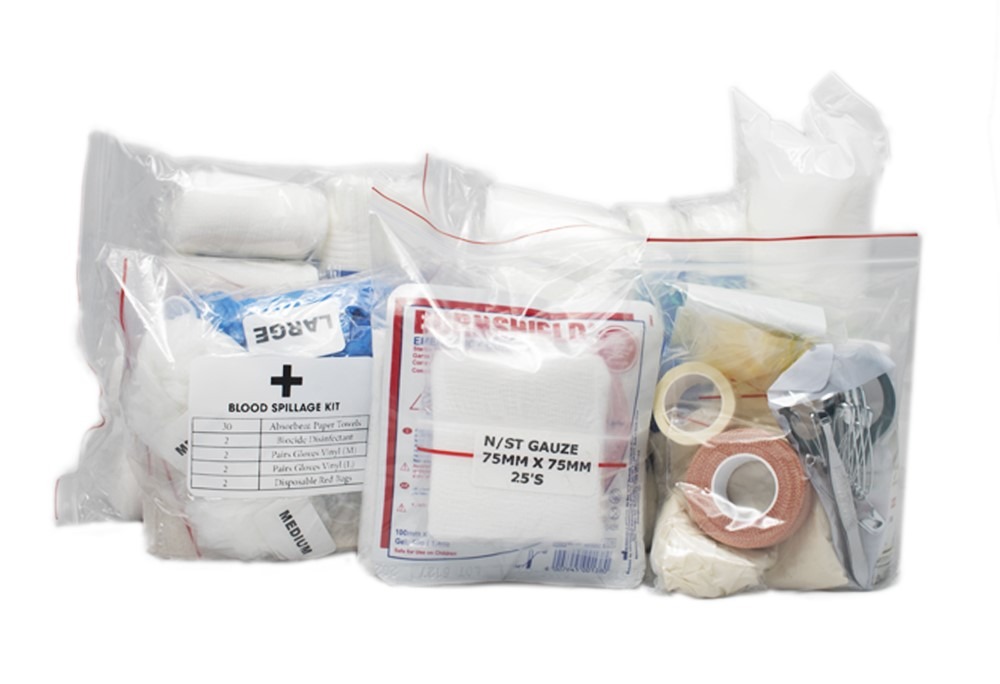
Depending on the workplace risk assessment, refill supplies may include dressings, gauze, plasters, gloves, eye pads, bandages, burn dressings, wound-cleansing products, resuscitation barriers, thermal blankets and other approved consumables.
Commercial refill systems are also available in different sizes and configurations. For example, established first-aid suppliers provide workplace refill packs designed around defined workplace populations and kit standards.
For Kenyan workplaces, however, refill packs should be checked against the applicable Kenyan requirements rather than assuming that an imported kit standard automatically satisfies local regulatory requirements.
First Aid Kits We Supply in Kenya
Solutions Unlimited supplies first aid boxes and kits for workplaces, homes and vehicles, as well as refill packs to keep existing kits stocked. Workplace kits are selected according to the number of workers and the risks identified in your workplace risk assessment. Tell us your workforce size and type of premises, and we will recommend the right kit.
| Fist Aid Kit Size | Suitable for |
|---|---|
| Workplace first aid box, 1 to 9 workers | Small offices, shops, workshops and similar premises |
| Workplace first aid box, 10 to 50 workers | Offices, schools, small factories, hotels and restaurants |
| Workplace first aid box, 51 to 100 workers | Larger offices, warehouses, construction sites and institutions |
| Workplace first aid box, 101 to 500 workers | Factories, large institutions and multi-department premises |
| Large workplaces (over 500 workers) | Multiple kit points and first aid room supplies |
| Home first aid kit | Homes, apartments and residential estates |
| Vehicle first aid kit | Cars, staff transport, school buses and fleets |
| First aid refill packs | Replacing used, damaged or expired items in an existing kit |
Our workplace kits are configured to the minimum contents listed in the Occupational Safety and Health (First Aid in the Workplace) Regulations, 2024, for the number of workers. As the Regulations require, they do not contain medicine.The prices start from KSh 1,399 to KSh 15,004
Not sure which kit you need? Request a quote or call +254 704 455 673 and we will help you choose the right kit for your premises.
First Aid Kit Installation and Placement
A first aid box does not normally require specialist installation in the same way as an access control or fire alarm system. However, proper positioning is an important part of installation and workplace readiness.
During a workplace assessment, the first aid kit should be positioned where it can be reached quickly without exposing the person retrieving it to unnecessary danger.
Depending on the premises, appropriate locations may include:
- Office reception or administration areas
- Security control rooms
- Factory production areas
- Workshops
- Warehouses
- Construction site offices
- School administration areas
- Hotel or hospitality service areas
- Staff welfare areas
- Commercial kitchens
- Laboratories
- Vehicle depots
- Residential common areas
The location should be clearly identified, kept accessible and communicated to employees.
Where a workplace has several buildings, floors or higher-risk work areas, a single centrally located kit may not provide adequate response coverage. The number and location of kits should therefore be considered as part of the workplace risk assessment.
Solutions Unlimited can assist with identifying appropriate locations and selecting first aid equipment according to the nature of the premises and the risks identified.
First Aid Kits for Different Environments
Offices
Office environments commonly require supplies for minor cuts, abrasions, falls and other everyday injuries. Additional provisions may be appropriate where the workplace has kitchens, workshops, laboratories or other specific hazards.
Factories and Workshops
Industrial environments can present higher risks from machinery, sharp materials, chemicals, heat and manual handling. First aid arrangements should therefore be based on a documented risk assessment and may require additional wound, burn, eye protection and trauma-related supplies.
Construction Sites
Construction sites can experience changing hazards as work progresses. First aid arrangements should be reviewed as site activities, workforce numbers and risks change.
Schools and Educational Institutions
Schools may require first aid facilities for students, teaching staff, support staff and visitors. Kits should be positioned where they can be accessed quickly by trained personnel while remaining controlled and properly maintained.
Hotels, Restaurants and Hospitality Facilities
Hospitality premises may require different first aid provisions in kitchens, housekeeping areas, maintenance departments and guest-facing areas. Burns, cuts, slips and falls are examples of risks that should be considered when developing the site’s first aid arrangements.
Warehouses and Distribution Centres
Warehouses should consider risks associated with manual handling, storage systems, loading operations, vehicles and material movement when determining the location and contents of first aid facilities.
Homes and Vehicles
Residential and vehicle first aid kits can provide useful supplies for treating minor injuries and managing an emergency while professional medical assistance is sought.
First Aid Box Inspection and Maintenance
A first aid kit should not be treated as a one-time purchase.
Regular inspections help confirm that:
- Required supplies are present.
- Used items have been replaced.
- Packaging remains intact.
- Sterile products have not been compromised.
- Products approaching their expiry or recommended replacement date are identified.
- Gloves and other protective equipment remain usable.
- The kit remains in its designated location.
- The contents remain appropriate for the current workplace risk profile.
Kenya’s 2024 Regulations place responsibility on the person administering first aid to ensure that the prerequisites of the first aid box or cupboard are maintained. They also require an annual first aid audit of the workplace.
For larger organisations, a simple inspection register can help track the date of inspection, items used, items replaced, outstanding requirements and the person responsible.
First Aid Training and Emergency Preparedness
Equipment is only one part of an effective first aid programme.
Kenyan regulations require persons appointed to administer first aid or be in charge of a workplace first aid box to receive appropriate training and hold a valid certificate of competence from an approved training institution. The certificate is subject to annual renewal under the 2024 Regulations.
Employers should therefore combine first aid equipment with:
- Trained first-aid personnel
- Clearly identified first aid locations
- Emergency contact information
- Appropriate casualty-transfer procedures
- Injury and treatment records
- Periodic inspections
- Workplace risk assessments
- Refresher training
- Regular replenishment of consumables
First aid should also form part of the wider workplace emergency response plan rather than operate as an isolated safety measure.
Choosing the Right First Aid Kit
The correct kit depends on more than the number of people in a building.
When selecting first aid equipment, consider:
Workforce size: Kenyan workplace requirements specify minimum quantities based on employee numbers.
Risk profile: An office, factory, construction site and commercial kitchen do not present the same hazards.
Number of locations: Large or multi-building premises may require several strategically positioned kits.
Accessibility: Equipment must be available quickly when required.
Consumable usage: High-traffic workplaces may require more frequent replenishment.
Storage conditions: Kits should be protected from conditions that could damage their contents.
Compliance: Workplace equipment should meet the applicable Kenyan regulatory and standards requirements.
Training: Appropriate personnel should know where the kit is located and how to respond within the limits of their training.
First Aid Kit Supply and Support in Kenya
Solutions UNLIMITED provides safety equipment and workplace safety solutions for organisations seeking to strengthen their emergency preparedness.
Our approach goes beyond supplying a container of medical consumables. We can assist organisations in considering the type and quantity of first aid equipment required, appropriate placement, replenishment requirements and integration with wider workplace safety arrangements.
Depending on the product and service supplied, Solutions Unlimited can provide up to 2 years manufacturer’s warranty together with technical support. Warranty coverage and support terms depend on the specific product or service supplied.
Frequently Asked Questions
What is a first aid box?
A first aid box is a container holding supplies used to provide immediate first aid for injuries and medical emergencies before further medical assistance is obtained. Workplace contents should be appropriate to the risks and comply with applicable Kenyan requirements.
What should a workplace first aid box contain in Kenya?
The 2024 Kenyan First Aid in the Workplace Regulations specify minimum contents and quantities based on workforce size. These include dressings, gauze, bandages, gloves, eye pads, antiseptic solution, resuscitation masks, thermal blankets and other specified items. The final contents should also reflect the workplace risk assessment.
Can medicine be kept in a workplace first aid box in Kenya?
Under the Occupational Safety and Health (First Aid in the Workplace) Regulations, 2024, medicine should not be included in the workplace first aid box or cupboard. This is an important distinction from some general-purpose household first aid kits.
How often should a first aid kit be checked?
First aid supplies should be checked regularly and replenished after use. Kenyan workplace regulations also require a first aid audit at least once every 12 months. Organisations may need more frequent internal inspections depending on their risk profile and consumption of supplies.
Should I buy a refill kit or a complete first aid box?
A refill kit is useful when the existing box or cupboard remains suitable and only its consumable contents need replacing. A complete kit may be more appropriate when the container is damaged, unsuitable, missing or when the workplace’s requirements have changed.
How many first aid kits does a workplace need?
There is no single number that is appropriate for every workplace. The required first aid arrangements depend on factors including workforce size, workplace layout and risk assessment. Large premises or workplaces spread across multiple buildings may require several accessible first aid points.
Does a first aid box replace first aid training?
No. Equipment and trained personnel are complementary. Kenyan regulations require persons appointed to administer first aid or be responsible for the first aid box to receive appropriate training and hold a valid certificate of competence.
Where should a first aid box be placed?
It should be readily accessible, clearly identified and located where it can be reached quickly without creating additional risk. Employees should also be informed about its location.
Can first aid kits be used in vehicles?
Yes. A vehicle first aid kit can provide useful supplies for managing minor injuries and supporting an emergency response while professional medical assistance is sought. Vehicle kits should be selected according to the vehicle’s use, occupants and operating environment.
Do first aid kits expire?
Some contents have expiry or recommended replacement dates, while other items can deteriorate through damage, contamination or prolonged storage. Regular inspection and replacement of depleted or unsuitable supplies is therefore important.
First Aid Preparedness Is More Than a Box
An effective first aid programme combines suitable equipment, trained personnel, accessible storage, regular inspection, replenishment and appropriate emergency procedures.
For Kenyan workplaces, these arrangements should be aligned with the Occupational Safety and Health Act and the Occupational Safety and Health (First Aid in the Workplace) Regulations, 2024.
Solutions Unlimited can support organisations with first aid equipment and broader workplace safety solutions designed around the requirements and risks of their premises.
We advise our clients on the reasons for installing first aid kits as a safety resource and how it is critical reducing injury severity, preventing infections and supporting compliance with occupational safety standards. Our products and our solutions are available in Thika, Meru, Nairobi, Kisumu, Mombasa, Eldoret, Kisii, Nakuru, Naivasha, Nanyuki, Kericho, Namanga, Busia and other major towns.
SOME OF OUR LOCAL AND INTERNATIONAL CORPORATE CLIENTS:



































Countries Using Our Solutions: Kenya| Uganda| Tanzania| Somalia| Somaliland| South Sudan| Ethiopia| Namibia
Solutions Unlimited Head Office: Seventh Floor, Pinetree Plaza, Kaburu Drive, Off Ngong Road-Nairobi Kenya.
Call us: +254 704 455 673 OR +254 20 2014 802 | Whatsapp: +254 704 455 673 | servicedesk@solutionsunlimited.co.ke