OSH HEALTH AND SAFETY SIGNS
Solutions Unlimited supplies, installs and advises businesses on workplace safety signs in Kenya, helping organisations communicate hazards, emergency procedures, prohibited actions and the location of safety equipment clearly.
We supply safety signage for offices, commercial buildings, factories, warehouses, schools, hospitals, construction sites, hotels, residential developments and other workplaces. Our range includes standard warning and prohibition signs, fire safety signs, emergency exit signs, equipment identification signs and photoluminescent safety signs for improved visibility during reduced-light conditions.
Effective signage should form part of a wider workplace risk-control system. Signs do not remove a hazard by themselves; they help communicate risks and the actions people need to take after appropriate engineering, administrative and other safety controls have been considered.
Safety Signs and Workplace Requirements in Kenya
Kenya’s Occupational Safety and Health Act, 2007 recognises the use of warning signs as part of workplace safety. Section 77 requires necessary precautions, including warning signs, to prevent injury to employees and other persons from mobile plants, falling objects and objects ejected from machinery and work processes.
The Act also contains specific fire-safety requirements. Fire exits and other escape routes must be maintained, and exits other than the ordinary means of exit must be distinctively and conspicuously marked. Workplaces must also provide adequate means of escape and ensure that employees are familiar with emergency procedures.
This means signage should be selected according to the hazards, activities, layout and emergency arrangements of the particular premises rather than simply installing a generic collection of signs.
Types of Safety Signs We Supply
Depending on the application, Solutions Unlimited can supply a range of workplace and emergency signs, including:
Fire Safety Signs
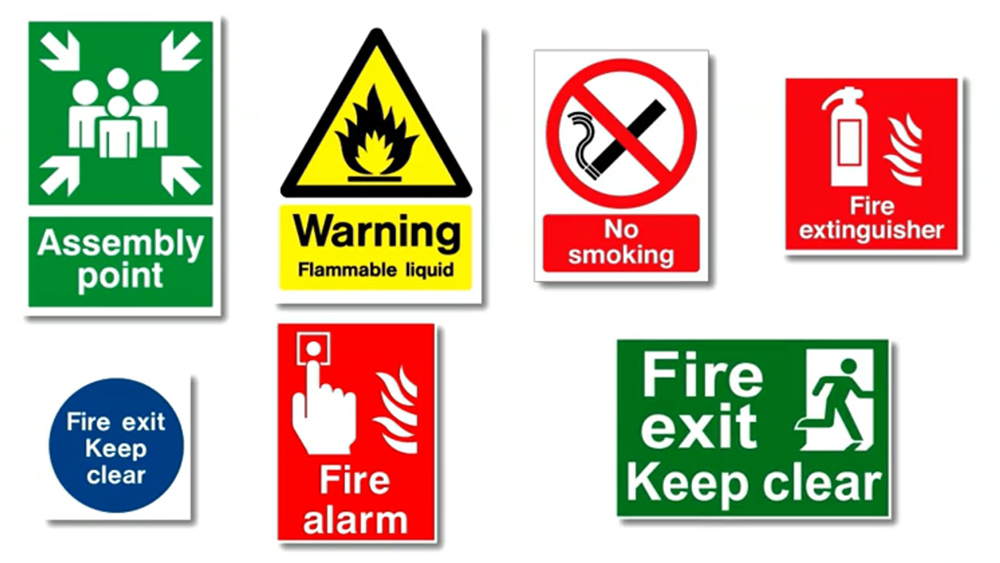
- Fire Exit signs
- Emergency Exit signs
- Fire Assembly Point signs
- Fire Action notices
- Fire Extinguisher identification signs
- Fire Hose Reel signs
- Fire Alarm signs
- Fire Door signs
- Emergency equipment location signs
Warning and Hazard Signs
- Warning: Electrical Hazard
- High Voltage signs
- Slippery Floor signs
- Flammable Material signs
- Falling Objects warnings
- Machinery hazard signs
- Construction site warnings
- Restricted-area warnings
- Chemical hazard signs
- Noise hazard signs
Prohibition Signs
- No Smoking
- No Entry
- No Unauthorised Access
- No Naked Flames
- No Parking
- No Mobile Phones
- No Unauthorised Personnel
Mandatory Action Signs
- Wear Safety Helmet
- Wear Safety Boots
- Wear Eye Protection
- Wear Hearing Protection
- Wear Protective Gloves
- Wear Respiratory Protection
- Other PPE requirements based on the workplace hazard
Security and Property Signs
- Electric Fence Warning signs
- CCTV-related warning signs where applicable to a client’s system
- Private Property signs
- Security Area signs
- Restricted Access signs
- Authorised Personnel Only signs
Emergency and Evacuation Signs
- Emergency Exit
- Escape Route
- Assembly Point
- Emergency Telephone
- First Aid
- Emergency Equipment
- Directional evacuation signs
Photoluminescent and Glow-in-the-Dark Safety Signs
For buildings where emergency routes or equipment need to remain identifiable when normal lighting is reduced, we can supply photoluminescent safety signage.
Photoluminescent materials absorb available ambient light and can subsequently provide visible guidance in darkness. Their suitability depends on the product specification, installation environment and available illumination.
Photoluminescent signage can be particularly useful around:
- Emergency exits
- Escape routes
- Staircases
- Fire-fighting equipment
- Assembly-point directions
- Emergency equipment
- Areas where visibility may be affected by a power interruption
ISO 16069:2017 provides principles for safety way guidance systems, including systems using phosphorescent components, and addresses factors such as material selection, layout, installation and maintenance.
Where appropriate, safety signs can also be selected using recognised graphical safety-sign conventions. ISO 7010 covers registered safety signs for accident prevention, fire protection, health-hazard information and emergency evacuation.
Safety Sign Materials
The appropriate sign material depends on where the sign will be installed and the conditions to which it will be exposed.
Solutions Unlimited can supply signs using suitable materials for different applications, including flexible plastic-based materials and photoluminescent products.
When selecting signage, we consider factors such as:
- Indoor or outdoor installation
- Exposure to sunlight and weather
- Humidity and dust
- Cleaning requirements
- Visibility and viewing distance
- Mounting surface
- Expected service environment
- Whether photoluminescence is required
- Whether the sign needs to be rigid, flexible or self-adhesive
Exact material construction, thickness, finish and durability should be confirmed against the particular sign or product specification rather than assumed to be identical across the entire range.
Safety Signage for Different Kenyan Workplaces
Different workplaces have different hazards. A warehouse, school, construction site and office should not necessarily use the same signage schedule.
Offices and Commercial Buildings
Typical requirements may include:
- Fire Exit signs
- Emergency Assembly Point signs
- Fire extinguisher identification
- First Aid signs
- No Smoking signs
- Restricted-access signs
- Electrical hazard warnings
- Emergency procedure notices
Factories and Workshops
Industrial environments may require a wider range of hazard and mandatory-action signs, including:
- Machinery hazard warnings
- PPE requirements
- Electrical warnings
- Chemical hazard signs
- High-noise-area warnings
- Restricted-access signs
- Emergency equipment identification
Kenya’s Occupational Safety and Health Act specifically refers to warning signs as a precaution for hazards associated with mobile plant, falling objects and objects ejected from machines and work processes.
Warehouses and Logistics Facilities
Signage can help communicate:
- Vehicle and pedestrian movement controls
- Restricted areas
- Forklift operating areas
- Loading and unloading zones
- PPE requirements
- Emergency exits
- Fire equipment locations
- Hazardous-material areas
Schools, Colleges and Childcare Facilities
Signs can help communicate emergency exits, assembly points, restricted areas, first-aid locations, fire equipment and other hazards in a way that is easily understood by staff, students, visitors and contractors.
Construction Sites
Construction environments can change frequently as work progresses. Warning and mandatory-action signs can therefore form part of the site’s ongoing risk-control arrangements.
Typical signage may include:
- Construction area warnings
- No unauthorised entry
- PPE requirements
- Falling-object warnings
- Electrical hazards
- Excavation warnings
- Vehicle movement warnings
- Emergency information
Hotels, Restaurants and Hospitality Facilities
Hotels and other hospitality premises require clear information for both staff and visitors. Depending on the premises and risk assessment, signage may include emergency exits, escape routes, fire equipment, assembly points, fire-action notices and restricted areas.
Kenyan tourism regulations also require appropriate fire exits/escapes to be clearly and prominently indicated in regulated tourism establishments.
Safety Signage Installation and Site Assessment
Installing signs is not simply a matter of putting a sign on the nearest wall.
Solutions Unlimited can advise on the type, location and visibility of signage according to the intended application. During installation, practical considerations may include:
- Identifying the hazard or emergency equipment that needs to be communicated.
- Reviewing the movement of employees, visitors and contractors.
- Identifying escape routes and emergency equipment locations.
- Selecting signs that are appropriate for the environment.
- Positioning signs where they can be seen without being obstructed.
- Checking that directional signs provide a logical route.
- Reviewing signs after changes to the building, equipment or workplace layout.
For fire-related signage, signs should not be used as a substitute for maintaining unobstructed escape routes and accessible fire-fighting equipment. Kenya’s Occupational Safety and Health Act requires adequate means of escape and requires fire exits and other escape provisions to be maintained appropriately.
Safety Signs Should Be Part of a Wider Safety System
Good signage works together with other workplace controls.
For example, a fire extinguisher sign helps a person locate the extinguisher, but it does not replace:
- The correct type and capacity of extinguisher
- Appropriate installation and accessibility
- Regular inspection and maintenance
- Fire-risk assessment
- Emergency procedures
- Staff awareness and training
- Clear escape routes
- Fire drills
Kenya’s Fire Risk Reduction Rules require workplaces to identify an assembly point and provide for fire drills, while the Occupational Safety and Health Act requires adequate fire-fighting equipment, escape arrangements and employee familiarity with fire-escape procedures.
Replacement, Updating and Maintenance
Safety signs should remain visible, legible and relevant to the workplace.
A sign may need replacement if it becomes:
- Faded
- Damaged
- Difficult to read
- Obscured
- Detached from its mounting
- No longer relevant because of a change in the workplace
- Inconsistent with a revised evacuation route or emergency arrangement
Signage should also be reviewed after renovations, changes to machinery, changes in building use, alterations to escape routes or the installation of new fire-safety equipment.
Safety Signage Refill and Replacement Requirements
For larger facilities, safety signage is not necessarily a one-time purchase.
Signs can become damaged during maintenance, building works, relocation of equipment or changes to the workplace layout. Organisations may therefore require replacement signs as part of their ongoing safety-maintenance programme.
Solutions Unlimited can assist with replacement and additional safety signs, allowing businesses to replenish individual signs without necessarily replacing an entire signage package.
For organisations managing several premises, we can also help standardise sign types, wording and identification across locations.
Safety Signs for New Buildings and Refurbishments
Safety signage should be considered during the planning and fit-out of a building rather than added only after occupation.
For new offices, commercial developments, warehouses, schools, factories and other facilities, signage requirements can be reviewed alongside:
- Fire exits
- Emergency escape routes
- Fire extinguishers
- Fire alarm points
- First-aid facilities
- Electrical and machinery hazards
- Restricted areas
- Assembly points
- PPE requirements
- Vehicle and pedestrian routes
This approach helps ensure that signage supports the actual layout and emergency arrangements of the premises.
Solutions Unlimited provides more than individual signs. We assist clients in selecting appropriate signage for the hazards and requirements of their premises.
Our support includes:
- Supply of workplace and emergency safety signs
- Safety-sign selection advice
- Installation and positioning assistance
- Photoluminescent signage options
- Replacement and additional signs
- Fire-safety equipment identification
- Integration with wider workplace safety requirements
- Technical support for products supplied by Solutions Unlimited
Where a product is covered by a manufacturer’s warranty, the applicable warranty period depends on the specific product and supplier terms. For products supplied with Solutions Unlimited support, we can also provide technical assistance relating to the supplied equipment.
Frequently Asked Questions
Are safety signs required in every workplace in Kenya?
Not every workplace requires the same signs. Signage requirements depend on the hazards, activities, building layout and applicable regulations. Kenya’s Occupational Safety and Health Act specifically requires warning signs in certain hazardous situations and includes specific requirements for marking fire exits and escape provisions.
What types of safety signs do you supply?
We supply a range of warning, prohibition, mandatory-action, fire-safety, emergency, directional, equipment-identification and restricted-area signs. Availability and specifications depend on the particular sign required.
Do you supply glow-in-the-dark safety signs?
Yes. Photoluminescent safety signs are available for applications where enhanced visibility is required during reduced-light conditions.
Where should fire exit signs be installed?
Fire exit signage should be positioned so that occupants can identify the appropriate route to an exit. The exact arrangement depends on the building layout, escape strategy and applicable requirements.
Can you install the safety signs?
Yes. Solutions Unlimited can provide installation assistance and advise on practical positioning, visibility and the relationship between signage and the relevant safety equipment or emergency route.
Can I order replacement safety signs?
Yes. Individual replacement and additional signs can be supplied where existing signs have become damaged, faded, obsolete or where the workplace layout has changed.
Do safety signs replace safety training?
No. Signage is a communication and risk-control measure. It should support appropriate training, procedures, supervision and other safety controls rather than replace them.
What are photoluminescent safety signs?
Photoluminescent signs use materials that absorb available light and continue to provide visible guidance after the surrounding light level falls. Their performance depends on the product specification and installation conditions.
Can you advise which signs my business needs?
Yes. The appropriate signage depends on the workplace hazards, activities, building layout, emergency arrangements and applicable requirements. Solutions Unlimited can assist with identifying practical signage requirements as part of a wider safety-systems approach.
Do you supply other workplace safety equipment?
Yes. Our safety range includes fire-safety equipment, first-aid products and other workplace safety solutions.
Safety Signs in Kenya – Practical, Clear and Fit for Purpose
Effective safety signage helps employees, visitors, contractors and members of the public understand hazards, restrictions, emergency routes and the location of safety equipment.
The most effective approach is not to install the largest possible number of signs, but to use clear, appropriate and well-positioned signage that supports the actual risks and emergency arrangements of the premises.
Solutions Unlimited supplies and installs workplace safety signage for organisations across Kenya and can advise on suitable options for offices, commercial buildings, schools, factories, warehouses, construction sites, hospitality facilities and other workplaces.
If you are looking for a fair price and where to buy safety signage in Kenya, Solutions Unlimited is known for world class, top quality safety signage installations. We serve clients in Thika, Meru, Nairobi, Kisumu, Mombasa, Eldoret, Kisii, Nakuru, Naivasha, Nanyuki, Kericho,Namanga,Busia and other major towns.
SOME OF OUR LOCAL AND INTERNATIONAL CORPORATE CLIENTS:
Countries Using Our Solutions: Kenya| Uganda| Tanzania| Somalia| Somaliland| South Sudan| Ethiopia| Namibia

Solutions Unlimited Head Office: Seventh Floor, Pinetree Plaza, Kaburu Drive, Off Ngong Road-Nairobi Kenya.
Call us: +254 704 455 673 OR +254 20 2014 802 | Whatsapp: +254 704 455 673 | servicedesk@solutionsunlimited.co.ke